

11th European Congress of Local Governments: Intergenerational Culture in Practice
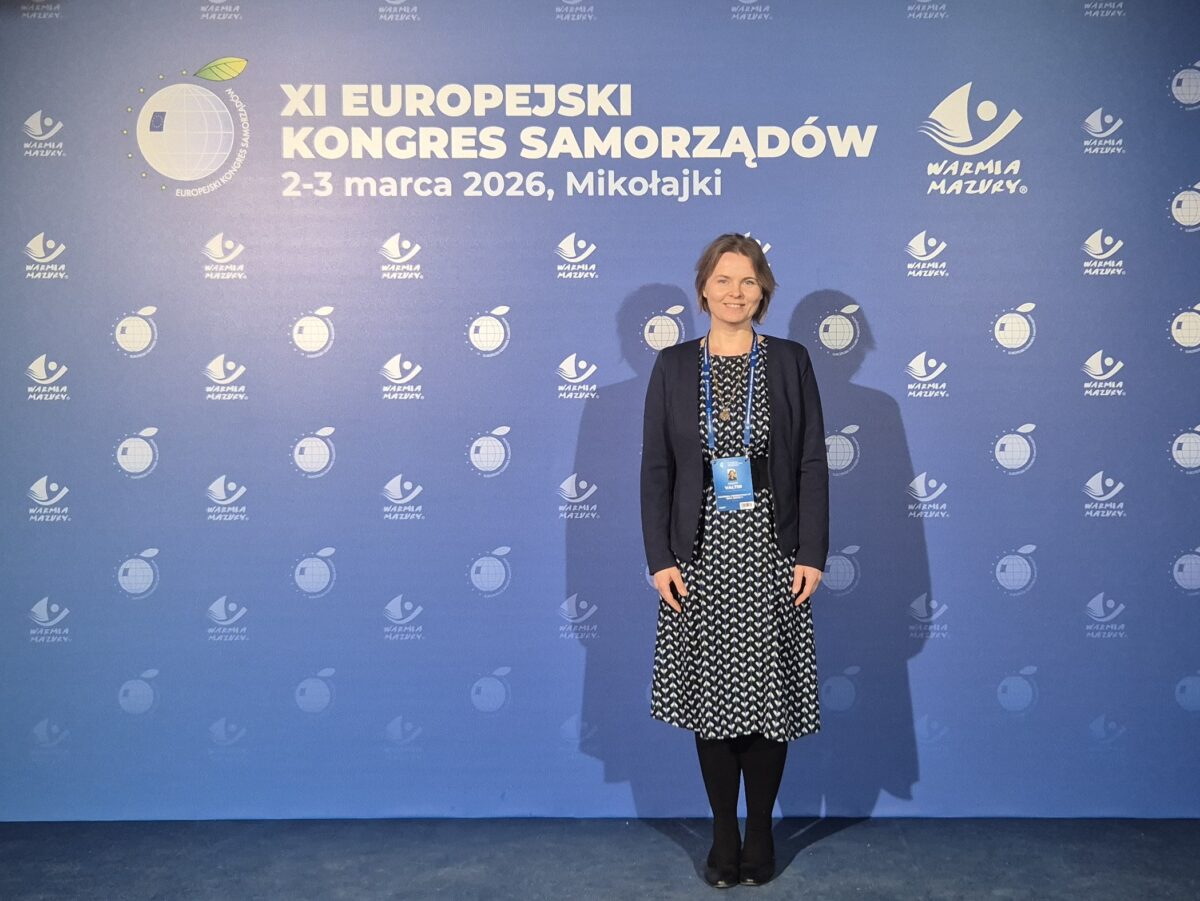
From 2–3 March 2026, the 11th European Congress of Local Governments took place in Mikolajki, Poland, bringing togethermore than 3000 local government representatives, policymakers, and civil society actors to discuss the future of cities and communities across Europe. Evelyn Valtin, Project Manager for social innovation activities under the Swiss-Estonian Cooperation Programme measure “Supporting Social Inclusion” at the National Foundation of Civil Society of Estonia, participated as a panelist in the discussion “City for Children and Seniors: Intergenerational Culture in Practice,” sharing insights from Estonia’s experience and initiatives fostering intergenerational connections.
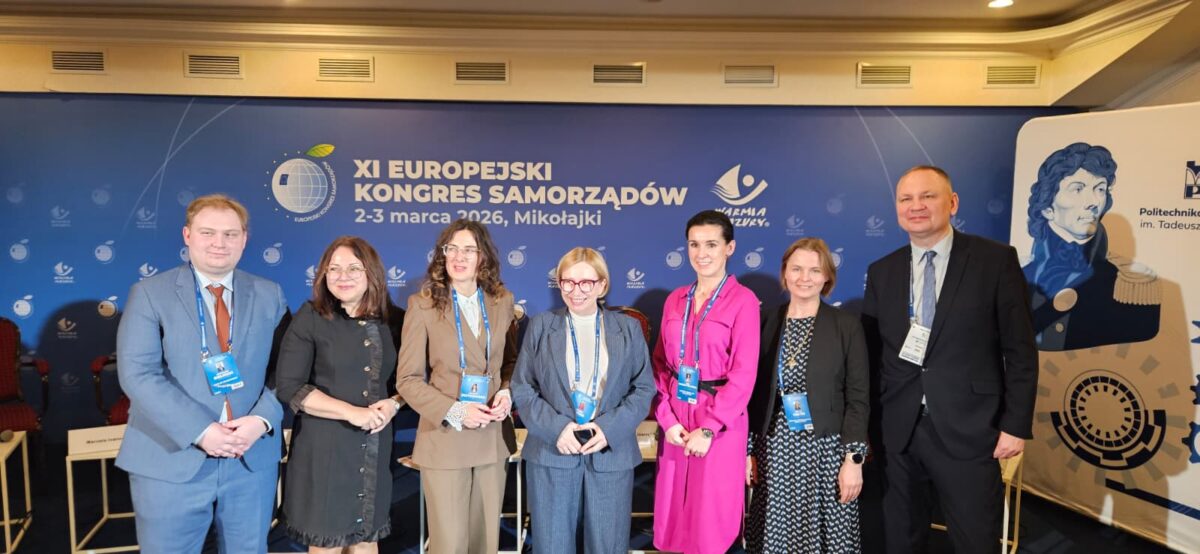
The panel was chaired by Ewa Kubejko-Polanska, President of the Board of the Rzeszow Smart City Association, Poland. The discussion featured distinguished speakers, including Marcela Ivancova, Mayor of the City of Svidnik, Slovakia; Dominika Piotrowska, Mayor of the Golub-Dobrzyn City Council, Poland; Joanna Wicha, Deputy in the Sejm, Poland; Bartłomiej Głuszak, CEO of the Federation of Social Organizations of the Warmian-Masurian Voivodeship FOSa, Poland; Jarosław Bieliński, President of the Board of Pole of Development, Poland; and Evelyn Valtin, Project Manager in Social Innovation at the National Foundation of Civil Society, Estonia.
The Need for Intergenerational Engagement
Intergenerational initiatives—such as shared activities, local-history storytelling, volunteering, and neighbourhood “support points”—have proven effective in strengthening social bonds and reducing loneliness. At the same time, Europe, including Estonia, faces demographic and societal challenges: an aging population, urban migration of young people, and closures of rural services. These trends make it increasingly important to develop structured approaches that promote meaningful connections between young people and seniors, preventing social disconnection.
In Estonia, the population is currently 1,332,712 (as of 12 March 2026, based on Worldometer’s elaboration of United Nations data). The median age is approximately 41.9–43.8 years, with seniors (65+) comprising around 20–21% of the population, working-age adults (20–64) 58–61%, and minors 19–21%. Notably, the number of people in their 20s has significantly decreased over the past decade, highlighting the need for intergenerational initiatives.
NFCS Role in Fostering Intergenerational Connections
The National Foundation of Civil Society (NFCS), established in 2008 by the Estonian Government, has been one of a key player in strengthening communities and civil society organisations. While NFCS is not exclusively focused on intergenerational practices, it supports initiatives that connect children, youth, and seniors through grants, advisory support, and capacity-building tools.
Currently NFCS manages grants for Developmental Leap and its preparation calls, International Cooperation Grants, Community Leader Scholarship and is running Civil Society Innovation Fund. For ten years NULA incubation programme has been run together with the Good Deed Foundation – it’s the development programme created by NFCS to offer support smart, effective, and innovative ideas.
NFCS to offer support smart, effective, and innovative ideas.
NFCS is coordinating Social Innovation Competence Centre of 9 organisation from all sectors and academia in Estonia to raise the awareness and competences of SI and SE, to bring together the network and support innovative solutions for the societal challenges. Swiss-Estonian cooperation programme on Social Inclusion, focussing on SI; and European Social Fund+, are the main supporters.
Additionally, two ESF funded project, one of which is increasing Civil Society Impact through Youth Engagement and the other is empowering civil society organisations to involve newcomers, people with different linguistic and cultural backgrounds, and returning Estonians in community activities. NFSC is coordinating CERV Contact Point in Estonia and also coordinating CSO consultants working in County Development Centres.
Initiatives from Estonia Strengthening Intergenerational Integration
Estonia offers a range of projects and initiatives that mostly focus on building capacities, enhancing competences, and creating meaningful opportunities for children, youth, and seniors to interact and learn from each other, and some of them foster intergenerational connections as well.
At the system level, programmes such as Silver Cluster provide trainings, workshops, and engagement activities aimed at maintaining seniors’ health and strengthening their social participation. They have also created EAKATON as a separate initiative, which aims to create solutions to improve the quality of life of older people.
Similarly, Golden League works strategically to shape age-friendly communities and policies, collaborating with the Ministry of the Social Affairs. Local structures like Senior Councils, Youth Councils, and the Toddler Council Network ensure that voices from all age groups—from young children to older adults—are included in decision-making and community life. Community Engagement Specialists at local governments further support these intergenerational connections.
Several initiatives directly address social challenges such as loneliness and isolation. Narrator, inspired by the Norwegian social enterprise Generation, connected seniors in nursing homes with young volunteers through intergenerational communication and shared activities. Over five years, the project reached over 400 seniors with the support of 200 young volunteers, raising awareness about elderly inclusion and inspiring similar initiatives.
Other practical examples include The Merry-Go-Round, which engages isolated seniors in community activities through song and dance, and the Men’s Group 55+, which provides a space for older men to reflect on aging and life transitions. Voluntary Companions for Elderly People and programmes supporting seniors’ mental health and digital skills, such as those facilitated by young volunteers, further strengthen social bonds. Several such initiatives have originated from the VunkiMano hackathon, which aims to support social innovation initiatives.
Digital platforms and innovation programmes also play an important role. CommuniCare connects volunteers with seniors in nursing homes to reduce communication gaps, while Seniorship mediates internship programmes for older adults, creating opportunities to retrain and re-enter the labor market. Many of these initiatives are nurtured through NULA social incubator, which supports smart, effective, and innovative solutions to societal challenges.
Together, these projects demonstrate Estonia’s holistic approach to intergenerational integration, combining capacity-building, community engagement, and social innovation to deliver measurable results and long-term impact.
Broader Insights from the Congress
In addition to the panel on intergenerational culture, Evelyn Valtin attended several other discussions addressing key societal challenges:
- Small Homelands, Great Potential – Rural Areas and Small Towns in the 21st Century
- Is Social Activism Born in Local Government?
- Local Security in the Face of Global Challenges: The Power of Social Responsibility in NGOs
- Comparing Integration Models Across Countries – What Works Locally and Can Be Transferred
- Cooperation Between Central Government and NGOs in Ensuring State Security
- Young People and Local Governments: How to Build the Future Together
- Women in Local Government and Politics
- Nurseries, Schools, and Public Kindergartens – A Necessity That Poses a Challenge
These discussions highlighted the importance of cross-sector collaboration, innovation, and active community engagement in shaping inclusive and sustainable local policies.
More info:
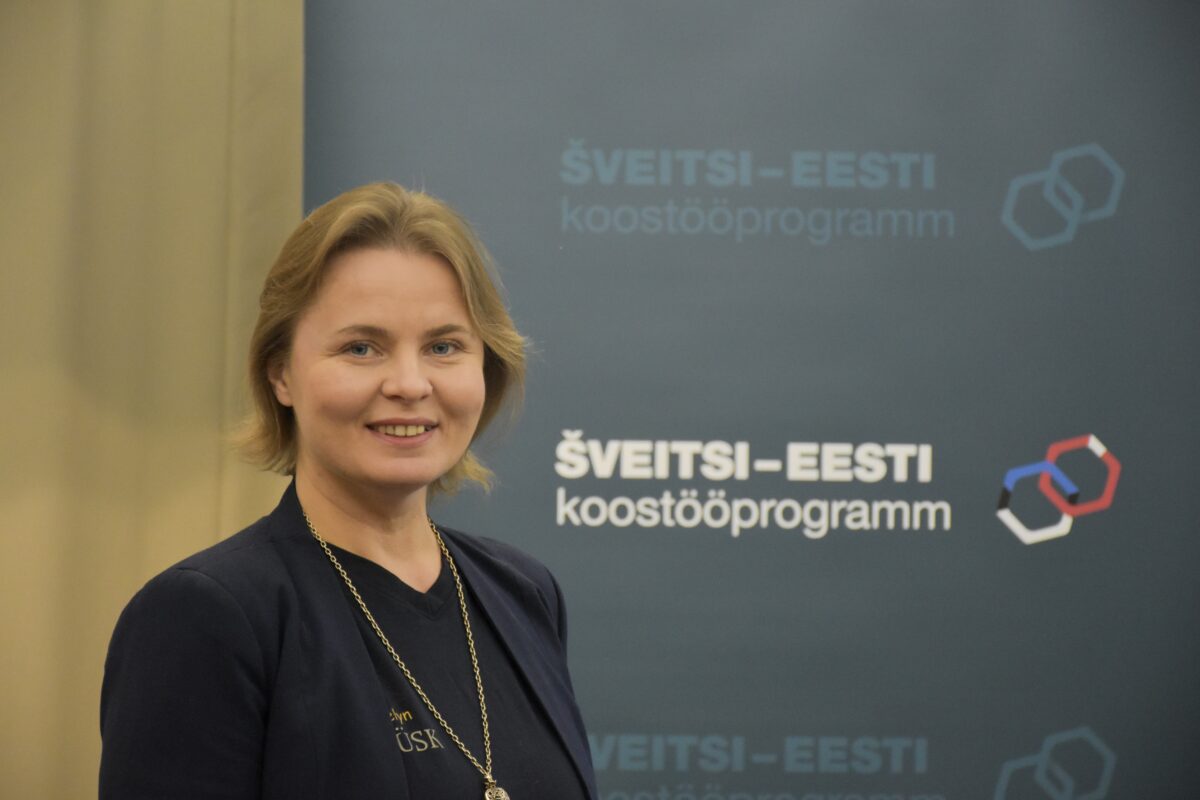
Evelyn Valtin
Management of the Social Innovation Component under the Swiss–Estonian Cooperation Programme measure “Supporting Social Inclusion”
5133 656
Evelyn.Valtin@kysk.ee